

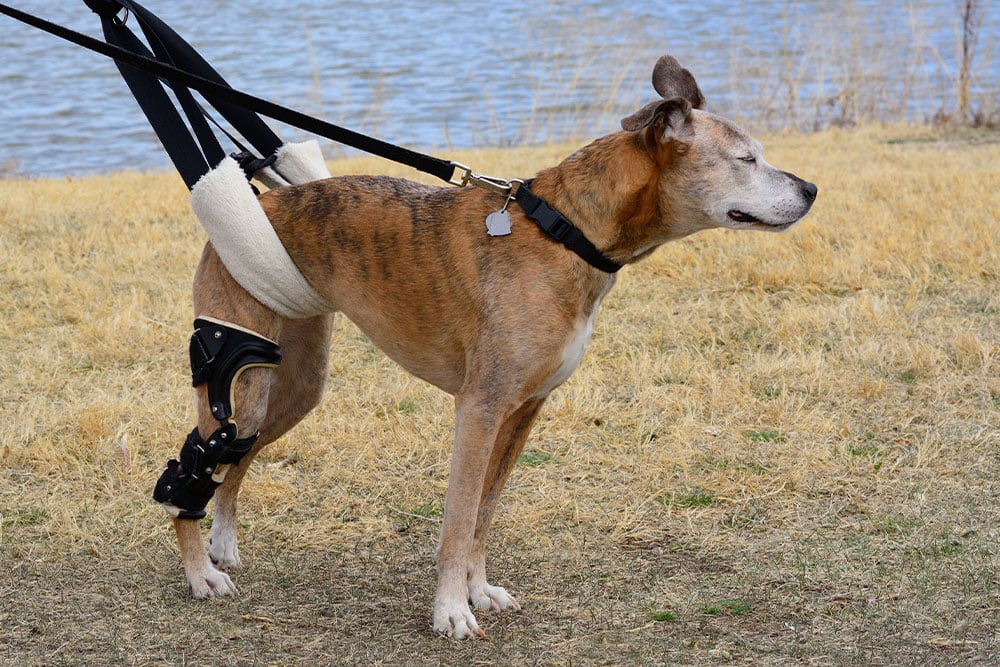
Torn ACL in Dogs: Surgical Repair Options and the Road to Recovery
It can happen in a split second: your dog plants a paw, pivots hard during play, and suddenly will not bear weight on a hind leg. In other cases, the onset is slower, with a limp that appears after exercise and gradually stops resolving with rest. Both patterns can signal a cranial cruciate ligament (CCL) tear, the most common cause of hind-leg lameness in dogs. The CCL stabilizes the knee joint, and once it is torn, the joint becomes unstable in a way that worsens over time without intervention.
As an AAHA-accredited hospital since 2000, Liberty Veterinary Hospital brings rigorous standards to every orthopedic evaluation. We use hands-on testing and imaging to confirm the diagnosis, walk you through the surgical options that fit your dog’s size, age, and activity level, and coordinate care with our trusted partners at MedVet so your dog gets the procedure they need. If your dog has been favoring a back leg, contact us to set up an evaluation so we can determine what is going on and map out a plan.
What the CCL Does and Why It Tears
The cranial cruciate ligament runs diagonally inside the knee joint and is the primary structure preventing the tibia from sliding forward relative to the femur during movement. When it fails, that forward sliding happens with every step, grinding joint surfaces and accelerating cartilage damage.
Most canine cruciate ligament injuries are not the acute sports-injury type that human ACL tears often are. In dogs, the ligament typically weakens over time through a degenerative process, and a final movement completes what was already underway. This explains why some dogs tear their CCL doing something as ordinary as jumping off a couch.
Contributing factors:
- Abrupt twisting or pivoting during fetch, play, or off-leash activity
- Inconsistent exercise patterns where a mostly sedentary dog runs hard on weekends
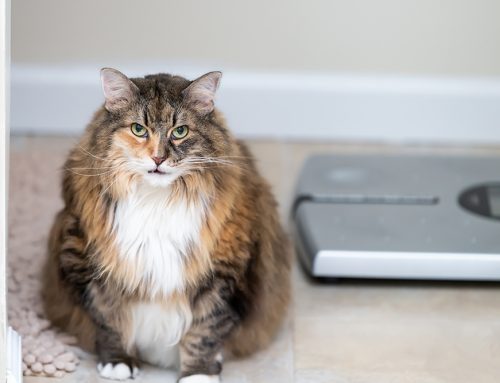
- Excess body weight increasing load on the joint with every stride
- Breed predisposition: Labrador Retrievers, Rottweilers, Golden Retrievers, Boxers
- A prior partial tear that progressed undetected
Our preventive care visits give us opportunities to assess body condition and joint health regularly, which provides the best early-warning system for at-risk joints.
Recognizing a CCL Injury
Some CCL tears produce dramatic, sudden non-weight-bearing that makes the problem obvious. Others present as a limping pattern that improves temporarily with rest before returning with activity, which owners often attribute to a minor sprain for several weeks.
Signs pointing toward CCL injury:
- Hind-leg lameness that is clearly worse after exercise and does not fully resolve with rest
- Visible swelling or firmness on the inner aspect of the knee
- A toe-touching gait where the foot barely contacts the ground
- Sitting with the affected leg extended outward rather than tucked
- Reluctance to jump, climb stairs, or rise from lying down
- Noticeable muscle wasting in the affected limb compared to the other side
The key distinction from a minor sprain: a sprain improves meaningfully within a week of rest. A CCL injury does not. If the limp is still present or recurring after a week of reduced activity, evaluation is the appropriate next step.
How We Confirm the Diagnosis
The physical examination is where diagnosis begins. The drawer sign and tibial thrust test assess how much the tibia slides relative to the femur under controlled pressure. Many dogs require light sedation for a complete and accurate examination because pain or tension can interfere with the test results.
X-ray diagnostic imaging identifies secondary joint changes including fluid accumulation and early arthritic remodeling that indicate how long the instability has been present. For cases requiring detailed soft tissue assessment, MRI provides visualization that standard radiographs cannot match.
What Happens Without Treatment
Rest temporarily reduces pain by reducing how frequently the unstable joint is loaded. It does not repair the torn ligament. The instability continues causing damage, arthritis accumulates and is permanent and progressive, and the meniscus is at significant risk of tearing from abnormal loading over time. A meniscal tear substantially worsens pain and complicates surgery when it occurs. Early evaluation and referral for surgery consistently produce better long-term joint outcomes than watching and waiting.
Conservative Management: When It Applies
For very small dogs, typically those under 15 pounds, the knee biomechanics allow some patients to stabilize through fibrous tissue formation with strict rest over several months. This is a discussion worth having for genuinely small patients.
For medium, large, and giant breed dogs, surgery consistently produces better long-term outcomes. The joint rarely achieves adequate stability without surgical intervention, and arthritis progresses regardless of rest. Contact us to discuss what makes sense for your dog’s specific size, age, and activity level.
Surgical Options: What to Expect at MedVet
When surgery is the right path, we refer to MedVet, our trusted orthopedic surgical partner. We share your dog’s full diagnostic workup with the surgical team, stay in close communication throughout the process, and take over ongoing recovery management and follow-up care once your dog is home. Here is what the surgical options look like so you go into that appointment informed.
TPLO (Tibial Plateau Leveling Osteotomy)
TPLO surgery changes the geometry of the tibial plateau so that normal walking forces no longer require an intact CCL to maintain stability. The tibial surface is cut, repositioned, and secured with a bone plate. TPLO is the gold standard for active dogs and medium to large breeds, with consistently strong long-term outcomes.
TTA (Tibial Tuberosity Advancement)
TTA redirects the mechanical force vector across the knee through a different bony modification. Used in active and medium to large breed dogs with outcomes comparable to TPLO in appropriate candidates.
Extracapsular Repair (Lateral Suture)
A synthetic suture placed outside the joint stabilizes the knee while fibrous scar tissue develops. Best suited to smaller or less active dogs where bone-modifying surgery is not indicated.
Recovery: What the Weeks Actually Look Like
Rehabilitation after surgery is where long-term function is restored. Rehabilitation therapies including controlled leash walking, hydrotherapy, and progressive therapeutic exercises rebuild the muscle mass and range of motion that surgery alone cannot provide.
General recovery milestones:
| Timeframe | Activity Level |
| Weeks 1-2 | Crate rest; leash only for bathroom breaks; incision monitoring |
| Weeks 3-4 | Short, slow leash walks beginning; gradual duration increase |
| Weeks 5-7 | Progressively longer leash walks; no running or jumping |
| Week 8+ | Recheck; off-leash activity discussed based on healing |
The e-collar stays on throughout recovery. Removing it early is one of the most common causes of incision complications and suture loss.
Managing Crate Rest
Active dogs on strict crate rest require realistic expectations and practical strategies:
- Keep the crate within household activity so your dog does not feel isolated
- Use food puzzles and enrichment toys for mental engagement without movement
- Take slow, brief leash sniff walks within the prescribed limits for mental stimulation
- Maintain a predictable daily schedule
Surviving crate rest is genuinely manageable with the right approach. The first two weeks are the most critical window for protecting the repair; setbacks during this period can require a second procedure.
Protecting the Joint Long-Term
Warm-ups and cooldowns before and after any activity should become permanent habits after CCL surgery. Weight management is one of the most impactful long-term factors. Every pound above ideal body weight increases load on the repaired knee and raises the statistical risk of injuring the opposite leg.
Dog hip and joint supplements support cartilage health and comfortable joint movement through recovery and ongoing. Ask our team which formulation is appropriate for your dog’s size and recovery stage.
Frequently Asked Questions
How long before my dog is back to normal?
Most dogs reach their 8-week recheck in good shape and can begin progressive off-leash activity from there. Full strength recovery continues over the following months. Dogs returning to demanding physical activity may benefit from a longer rehabilitation program.
Will the other leg be at risk?
The risk is real. Studies suggest 40 to 60 percent of dogs with one CCL rupture will injure the opposite leg within two years. Weight management and consistent conditioning reduce but do not eliminate that risk.
Is TPLO or extracapsular repair better for my dog?
The answer depends on your dog’s size, activity level, and anatomy. We will discuss each option and our recommendation at your evaluation, and the MedVet surgical team will confirm the best approach based on their assessment.
What does AAHA accreditation mean for my dog’s care?
AAHA accreditation means our diagnostic protocols, equipment, and standards are independently evaluated and meet the highest benchmarks in veterinary medicine. Fewer than 15 percent of practices meet AAHA standards. For your dog’s CCL care, that means a thorough, accurate diagnosis, clear communication about your options, and attentive follow-up management throughout recovery.
Getting Your Dog the Evaluation They Need
CCL injuries are serious but highly treatable. The dogs that do best are the ones whose families recognize the signs early, pursue an accurate diagnosis, and follow through on the right surgical approach and structured recovery. At Liberty Veterinary Hospital, we handle the diagnostic workup, explain your options clearly, coordinate the surgical referral to MedVet, and manage your dog’s recovery with you every step of the way.
Request an appointment or contact us to schedule an evaluation if your dog has been limping. Our team is here to help you understand the options and make the right decision for your dog.