



Getting a dog ready for daycare usually takes a few weeks of lead time, not a phone call the night before, because required vaccinations need to be scheduled and need time to build protection. That reality tends to land right when a new job, a longer commute, or a packed travel season makes eight hours of home-alone howling suddenly very real. The countdown runs in stages: research facilities and ask the safety questions early, book the health visit and vaccinations next, then plan a short trial day before committing to a full schedule. Puppies run on a longer clock than adult dogs, and their countdown should include however many rounds of the puppy vaccine series are still to come.
The medical entries on that countdown are the most straightforward part when Liberty Veterinary Hospital handles them: a readiness exam, the kennel cough vaccine and any other shots a facility requires, and the fecal check good daycares increasingly ask for. If your dog turns out to be more introvert than social butterfly, we also offer dog boarding in Liberty Township with individual exercise in a grassy fenced yard several times a day instead of a group free-for-all. Before a first day lands on your calendar, get in touch and we will work through what your pet needs to stay safe and healthy with our AAHA-accredited expert veterinary services.
Daycare Prep: What to Know
- The questions you ask before the first drop-off reveal more about a daycare than any tour or website ever will.
- Required vaccines lower the odds of illness moving through a play group, but they reduce risk rather than removing it.
- Group play is a wonderful fit for many dogs and the wrong environment for others, and that can change as a dog gets older.
- A pre-daycare wellness visit confirms vaccines, prevention, and readiness so the trial day is only about whether your dog has fun.
What Separates a Great Dog Daycare From a Room Full of Chaos?
A great dog daycare is defined by what happens on the play floor, not the lobby: safe, size-matched play, structured rest woven into the day, staff who catch stress early, thoughtful matching, and clear communication with you.
Quality varies enormously from one facility to the next, which is why direct questions do more work than first impressions. The best facilities use structured socialization to build a dog’s confidence, pairing dogs by size and play style rather than turning them all loose together.
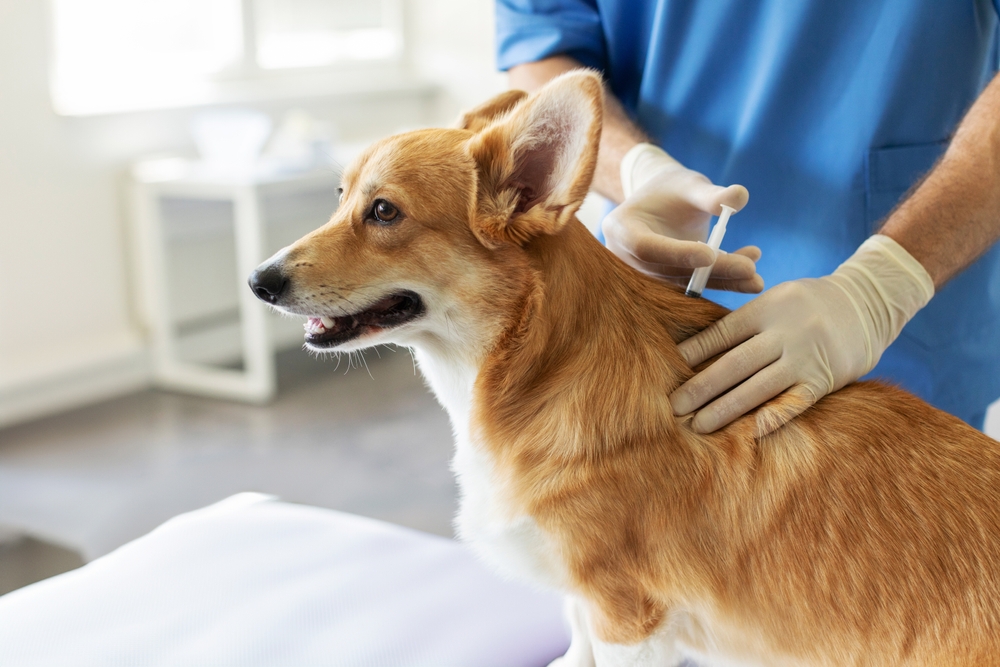
A wellness visit before any trial day confirms your dog’s vaccines, parasite prevention, and general readiness, so the group setting starts on solid footing.
Is Your Dog Really Built for Group Play?
Not every dog belongs in daycare, and that’s completely normal. Some light up in a crowd; others find it exhausting. A dog’s tolerance for group settings isn’t fixed; it often narrows as a dog ages, develops arthritis, or simply outgrows the chaos they enjoyed as a youngster.
Signs of a good fit are easy to spot once you know them: a loose, wiggly body, play bows, and a dog who takes their own breaks and then dives back in. Stiff posture, a tucked tail, hiding under benches, or snapping to create space all point the other way and are worth a rethink. For a dog who gets anxious or reactive around others, dog training can turn rough days into manageable ones, or point toward a better setup entirely.
When Boarding Is the Better Call
Dogs who prefer calm or need one-on-one attention are often happier away from the group, and a dog on daily medication, one managing a chronic illness, or one recovering from surgery doesn’t belong in a busy play group. For them, supervised boarding like ours at Liberty Veterinary Hospital, with individual exercise in a grassy fenced yard, offers movement and attention without the crowd.
Why Is a Good Daycare Safer Than the Dog Park?
A well-run daycare screens every dog at the door and supervises play the whole time; a public park does neither, and that’s the whole difference. At a public park, the dog park risks start at the gate: no one checks vaccine records, no one screens temperaments, and no trained staff steps in when play tips into a fight.
There’s no accountability either: a scuffle goes unreported, an under-vaccinated dog wanders in, a sick dog spreads a virus, and you never know what your dog is exposed to. Parks still work for some confident, well-matched dogs at quiet hours. If you’re torn, we’re glad to talk through your dog’s temperament and health history and help you decide.
When Can a Puppy Start Daycare?
Most puppies should wait for general daycare until their core vaccine series is complete, usually around 16 weeks, because their immune systems are still developing and busy play floors carry real disease risk. Some facilities run dedicated puppy groups with stricter health rules that may fit a little earlier in the series.
When you tour puppy programs, the questions get more specific: are groups matched by age and size, are sessions kept short, are the youngest kept separate from adult dogs, and how many trained staff are on the floor. We can map out your puppy’s vaccine and socialization timeline so you know exactly when group play becomes a safe option.
Puppy Classes, Daycare, or the Dog Park First?
The window for puppy socialization closes by around 12 to 14 weeks, well before the core vaccine series is finished, which is why waiting until every shot is done to begin social exposure works against your puppy. The safest exposure during this stretch is a structured puppy class that requires vaccines, keeps groups small, and cleans between sessions. Dog parks are the riskiest place for a puppy mid-series and are best skipped for now. Once the series wraps up, those early classes make the eventual daycare transition far smoother, and the same red flags you’d use to judge a facility apply to a class, only more strictly.
What Should You Ask the Staff Before the First Drop-Off?
Daycare safety comes down to the people on the floor, not the square footage: safe group play depends on how many dogs each handler manages, whether they can read the room, and how quickly they break up mismatched pairings before a squabble escalates.
A good facility answers each question specifically; a careless one stays vague. The goal isn’t zero conflict ever, but a place that heads off trouble early and responds well when it happens.
| Ask the staff | What a good answer sounds like |
| What’s your dog-to-staff ratio? | A specific number, with more hands for bigger or higher-energy groups. |
| How are handlers trained? | Ongoing training in canine body language and de-escalation, not just cleaning. |
| Do you screen new dogs? | A temperament assessment and a trial day before a dog joins a group. |
| How are dogs grouped? | By size, age, energy, and play style, with careful introductions. |
| What happens when a dog gets stressed? | Staff step in early, offer a break, and use quiet space rather than letting it ride. |
| Can I watch the play floor? | Yes, in person or by camera; hesitation here is a red flag. |
| Is there scheduled rest? | Built-in downtime, because dogs who never get a break turn cranky. |
If you’re unsure how your dog will read in a crowd, our veterinarians can review your dog’s specific needs and help you prep for an evaluation. Whatever place you tour, also get clear answers on the things the play floor doesn’t show you:
- Vaccines and prevention: which shots are required and how records get verified.
- Illness and injury response: what happens if a dog gets sick or hurt, and how quickly you’re told.
- Cleaning: how often surfaces, bowls, and bedding are disinfected.
- Seniors and medical needs: how older dogs and dogs on medication are accommodated.
Does the Building Hold Up When the Weather Turns?
The building matters as much as the staff, and how a daycare answers about climate control tells you how it runs on a bad weather day. Liberty Township swings from humid summer afternoons to icy winter mornings, and a strong facility keeps indoor temperatures steady, moves play inside during extremes, and watches closely for signs of overheating.
On days too hot, cold, or stormy for the yard, ask what keeps dogs occupied indoors; puzzle feeders, sniff games, and rotating rest keep a group from turning restless. Toys and treats are a classic flashpoint, so ask how staff handle resource guarding, since the safest floors keep high-value items out of group play. Ask what the play surfaces are, too, because good drainage and non-slip footing prevent both infection and injury.
Flat-faced dogs like Bulldogs and Pugs, seniors, overweight dogs, and any dog with a heart or airway condition overheat faster than the rest and need extra watching when it’s warm. If your dog comes home wobbly, breathing hard, or bright red after a hot session, call us right away; heat trouble moves fast. While we’re open we can see your dog quickly, and after hours our on-call doctor can tell you whether it can wait or belongs at a 24/7 emergency hospital.
Which Vaccines and Parasite Prevention Should a Daycare Require?
Ask a daycare exactly which vaccines it requires and how it verifies them, because the dog with lapsed records is the risk to everyone else. Requirements lower risk; they don’t erase it, so pair current vaccines with steady parasite prevention and a common-sense stay-home rule when your dog is under the weather.
Vaccines are only half the picture, because intestinal parasites pass easily between dogs sharing grass and water bowls, which is why routine fecal testing and year-round prevention belong on your list of questions. Most places also ask for a symptom-free stretch before a dog returns after any illness.
| Requirement | Why daycares ask for it |
| DHPP (distemper, parvo) | Guards against serious viruses that spread fast in a group. |
| Rabies | Expected almost everywhere before a dog joins group play. |
| Bordetella (kennel cough) | Cuts down the airborne cough that races through play rooms. |
| Canine influenza | Increasingly required as outbreaks show up in social settings. |
| Leptospirosis | Matters where dogs share puddles and standing water. |
| Fecal exam | Catches intestinal parasites before they pass to other dogs. |
| Heartworm, flea, and tick prevention | Keeps year-round pests from hitching a ride home. |
We can run the fecal check a daycare asks for and put together vaccine documentation and a tailored prevention plan matched to how often your dog is in a group. In general, vaccines should be given about two weeks before potential exposure to other dogs to ensure their immune system has time to properly build up the antibodies it needs for protection. The bordetella vaccine, when given intranasally or orally, has a shorter window; we’ll let you know exactly when it’s safe to go to daycare after vaccination for your specific dog.
What Can Your Dog Catch or Bring Home From Daycare?
Group settings raise the odds of contagious illness even with good cleaning and vaccine rules, simply because a lot of dogs share air, water, and ground. The best defenses are staying current on vaccines, keeping parasite prevention consistent, and keeping a sick dog home. Most bugs are preventable or very treatable when caught early.
The illnesses that travel through a play group fall into a few buckets:
- Spread through the air: The dry, honking cough of kennel cough travels through the air in close quarters, making it the most common thing a dog brings home from a busy play room. Canine influenza moves the same dog-to-dog way and can look similar in its early days.
- Spread through contaminated ground, stool, or water: Parvovirus spreads through contaminated stool and can linger in soil for months. Leptospirosis hides in the standing water and shared puddles a group of dogs will inevitably drink from, and it can pass to people as well as dogs. Giardia moves through contaminated water and stool and can cause loose, greasy stools days after a visit, sometimes in a dog that otherwise seems perfectly healthy.
- Spread by direct contact: Ringworm isn’t a worm at all but a contagious fungus that spreads on shared bedding and toys, usually surfacing as a circular patch of hair loss a week or two later. Sarcoptic mange, an intensely itchy mite, jumps between dogs in close contact and needs a veterinary diagnosis. Harmless oral papillomas, the little warts that can appear around a young dog’s mouth after mingling, usually clear on their own.
If your dog comes home coughing, scratching, or with loose stools, our in-house lab can check a stool sample or look at a skin scraping to pin down the cause and get treatment started.
What Should You Do Before, and Check After, a Daycare Day?
A smooth daycare day starts well before drop-off and doesn’t end at pickup. Handle the health and paperwork ahead of time, ease your dog in with short trial sessions, and give them a once-over when you get home so a good first day sets the tone for the ones that follow.
Ease In With Short Trials and Honest Communication
The best transitions happen gradually, with short trial sessions and calm, low-drama drop-offs, since dogs read your nerves. Just as important is telling the staff the truth about your dog: medication schedules, anxiety triggers, physical limits, and any known behavioral quirks. A good facility wants the full picture, not a highlight reel.
Handle the Health and Logistics Ahead of Time
A little planning clears the way for a good first day:
- Book a wellness visit a week or two ahead so vaccines and prevention are current with time to spare.
- Refresh preventives and get a recent fecal exam rather than scrambling the morning of.
- Gather your documentation so vaccine records are ready to hand over.
- Feed lightly before drop-off so a full belly and hard play don’t collide.
- Know what a good pickup looks like: pleasantly tired and ready to nap, not limping, hiding, or frantic.
Even the best-run facility has the occasional bump, so check your dog over at every pickup. Even small bite wounds deserve a close look, because a puncture that looks like nothing on the surface can seal bacteria under the skin and turn into an abscess days later.
Common Questions About Dog Daycare
How Often Is Too Often for Daycare?
There’s no single right number; it depends on the dog. Some high-energy dogs thrive on daily play, while others do best with one or two days a week and plenty of downtime in between. Watch how your dog acts at home: coming home wired, crashing hard for two days straight, or getting short-tempered can mean the schedule is too much. Rest days matter as much as play days for keeping a dog balanced.
Are Minor Scratches After Daycare a Concern?
Most surface scratches from normal play are minor. Clean them gently and keep an eye out over the next day or two. What deserves a closer look is swelling, warmth, discharge, limping, or any small puncture, which can be a bite that needs attention. Eye irritation counts too. If a scratch looks worse the next morning instead of better, or your dog keeps fussing at it, give us a call rather than waiting it out.
Why Doesn’t My Dog Want to Go to Daycare Anymore?
A dog who once loved daycare and now digs in their heels is telling you something changed. It might be a new dog or handler they clash with, a scary moment on the floor, or simply growing older and preferring calm. It can also be pain: arthritis or a sore spot makes rough play no fun. Because a sudden shift can point to a health issue, a check-up is a smart first move, along with an honest conversation with the staff.
Making the Right Daycare Call, Together
The right daycare for the right dog is a genuine gift: safe play, happily tired evenings, and a dog who isn’t home alone all day. The wrong fit just creates new problems. Our part is the readiness side, from updating vaccines and checking that group play suits your dog to getting your paperwork in order. When you’re ready, schedule a pre-daycare exam, and if daycare turns out not to be your dog’s thing, quiet boarding with individual attention is always an option. Liberty Veterinary Hospital is here to help you get the decision right.


Leave A Comment