


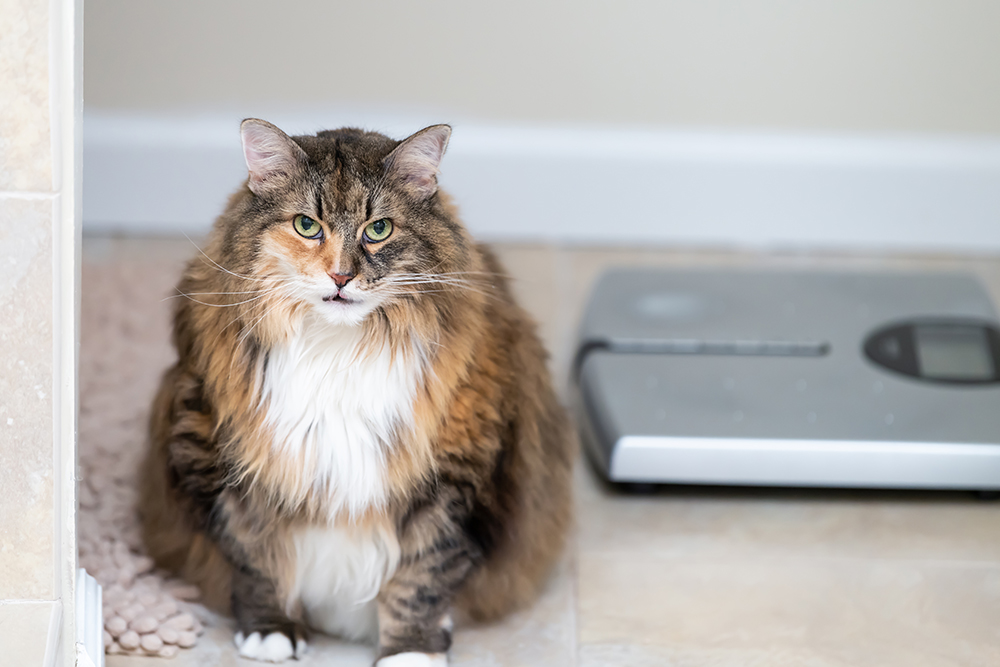
Most pets carrying extra weight do not look obviously overweight to the people who feed them every day, which is exactly why body condition scoring exists. The scale runs from 1 to 9 and rests on three hands-on checks: ribs you can feel under a thin layer of fat, a visible waist from above, and a belly that tucks up from the side. A pet in the middle of the scale is at a healthy weight; most dogs and cats land a notch or two higher than their family thinks. That gap matters because even mild excess weight shortens lifespan and worsens arthritis, diabetes, and breathing problems.
Liberty Veterinary Hospital in Liberty Township builds weight conversations into routine wellness visits, because we would rather catch a creeping body condition score early than treat the joint and metabolic problems that follow. When the scale will not budge, we run in-house bloodwork for thyroid panels and a chemistry profile to check for diabetes and other endocrine diseases. If your dog or cat is rounder than they used to be, request an appointment and we will map out portions, treats, and a recheck cadence that fits your household.
The Takeaways Worth Keeping
- Body condition scoring reads fat and muscle together, so it tells you far more about your pet’s health than the number on the scale alone.
- You can check body condition at home with three simple hands-on tests, and a middle score on the 1-to-9 scale is the goal for both dogs and cats.
- Feeding for your pet’s ideal weight, measuring every meal, and losing slowly beats any crash diet, which usually backfires into regain.
- When weight will not move, an underlying medical problem may be driving it, and in-house bloodwork is often the fastest way to find out.
Can You Learn to Score Your Pet at Home?
You can, and it takes about a minute. Body condition scoring comes down to three checks: feel along the ribs, look down at the waist from above, and look at the belly from the side. On an ideally conditioned pet, the ribs feel like the bones on the back of your hand, there is a clear waist tucking in behind the ribs, and the belly slopes up rather than hanging level.
The nine-point scale used for body condition scoring runs from 1 to 3 for underweight, 4 to 5 for ideal, 6 to 7 for overweight, and 8 to 9 for obese, with each number tied to what you can see from above and feel over the ribs. Run this check about once a month. Fluffy coats hide a lot, so with a long-haired pet you have to use your hands, not just your eyes.
| Category | Score | What you feel and see |
| Underweight | 1-3 | Ribs, spine, and hip bones stand out with little fat; severe waist tuck |
| Ideal | 4-5 | Ribs felt easily under a thin fat layer; visible waist; belly tucks up |
| Overweight | 6-7 | Ribs hard to feel under fat; waist barely there; belly starts to sag |
| Obese | 8-9 | Ribs buried; no waist; belly hangs; fat pads over hips and spine |
If you are not sure where your pet lands, that is exactly the kind of thing we love to check in person. You can book a hands-on assessment and we will walk you through the technique on your own pet. If you just want a second opinion on where they sit, simply reach out.
What Belongs in the Bowl, and How Much?
Feed for the pet you want, not the pet you have. Build portions around your pet’s ideal weight, and let a calorie calculator set a real daily target instead of a guess that usually runs high. Then weigh or measure every meal, because eyeballing the bowl is how overfeeding sneaks in.
Use a kitchen scale or a proper measuring cup for accuracy. Every calorie counts, so training treats, the dental chew, the toast crust, and that spoonful of yogurt all belong in the daily math. It adds up faster than most families expect. Cats need extra care, because cutting their calories too quickly can trigger hepatic lipidosis, a life-threatening liver disease that makes fast feline weight loss genuinely dangerous. Slow and steady is not just kinder for cats, it is safer.
Prescription or Over-the-Counter Weight Diet: Does It Matter?
It matters more than the shelf label suggests. When it comes to choosing the right food, prescription weight-loss formulas go through feeding trials that prove they trim fat while protecting lean muscle, something most over-the-counter light diets never test for. A bag marked “healthy weight” or “light” usually just has less fat, with no proof it drives safe, consistent loss.
For a pet who needs to drop significant weight, or who has other medical issues in the mix, prescription diets give predictable results with veterinary oversight built in. We can help you match your pet to the right diet based on their body condition, health status, and how much weight they need to lose. Once we have a plan, you can order prescription weight-loss food directly through us.
Does My Pet’s Ideal Weight Change as They Get Older?
Needs change at every life stage. Puppies and kittens grow fast and need the calories for it, adults settle into maintenance, and seniors can quietly lose muscle even as their fat creeps up. That is why body condition is not a one-and-done check but something we track across a lifetime.
Regular wellness visits fold a body condition check into every exam, so trends surface instead of sneaking up on you. For most adult dogs and cats, an exam every six months catches weight changes and early disease while there is still plenty of room to act. As your pet ages, we will update their portions, diet, and activity targets to match where they are now, keeping the whole picture in view year over year.
How Much Is My Pet’s Extra Weight Really Costing Me?
More than you might guess, and it starts before any illness does. An overweight pet eats more than they need, and those extra calories add up to hundreds of dollars a year in food alone. Love often shows up as an extra treat or a topped-off bowl, and none of that comes from a bad place.
Then there is the real expense, which is managing what the weight causes. A single obesity-linked condition like diabetes can mean daily insulin and regular monitoring for the rest of a pet’s life, a bill that dwarfs the price of the extra treats that led to it. Arthritis brings long-term pain medication. Back problems can end in emergency surgery. Keeping your pet lean is one of the cheapest forms of preventive care there is, and it buys you more good years together. We are here to help you find the balance, not to judge how you got here.
Isn’t a Number on the Scale the Whole Story?
Not even close. The scale gives you one number, but it says nothing about what that weight is made of. Two pets at the same weight can be built completely differently: one lean and athletic, one soft and out of shape. Body condition scoring reads fat and muscle together, which is why it paints a truer picture of health than pounds alone ever could.
Being over or underweight both cause real problems, and breed and build shift the target quite a bit. A whippet and a bulldog will never carry weight the same way. A fit pet can also weigh more than you would guess and still be in great shape, since lean muscle mass is denser than fat. A pet who holds their weight but loses that lean tissue is not actually thriving, even if the scale looks steady. What matters most is how your pet moves, feels, and gets through an ordinary day, not whether they hit a show-ring silhouette.
The Ways Extra Weight Wears a Body Down
Extra pounds strain almost every system in the body at once. The joints and spine take the mechanical load, the heart and lungs work harder, and the metabolism shifts under the added fat. The result is a pet who is more prone to injury, illness, and a shorter life than they should have.
Here is where that strain tends to show up:
- Joints and spine: carrying extra pounds puts steady pressure on the spine and raises the risk of intervertebral disc disease, a painful back problem that can end in emergency surgery, as well as increasing the risk and severity of arthritis.
- Urinary tract: heavier pets also form bladder stones more readily, and these hard mineral deposits can block the flow of urine entirely.
- Heart and blood pressure: every extra pound asks the cardiovascular system to move blood through more tissue, and that ongoing strain shows up alongside creeping hypertension in pets carrying too much weight.
- Diabetes: excess body fat makes the body’s cells less responsive to insulin, forcing the pancreas to work harder until it can no longer keep up
- Overheating: fat acts like insulation, so overweight pets struggle to cool down and are far more prone to heatstroke on warm days or even after light activity.
- Anesthesia and breathing: extra weight makes going under riskier and crowds the chest, which hits flat-faced breeds like bulldogs and pugs especially hard.
All of these strains add up to a shorter lifespan, while lean pets tend to stay healthier and live meaningfully longer.
What About Pets Who Are Too Thin?
Underweight pets carry their own serious risks, and this cuts both ways. A pet who is too lean has a weaker immune system, struggles to stay warm, and loses muscle that they need for mobility and balance. Healing from illness, surgery, or injury takes longer when the body has no reserves to draw on. If your pet is trending too thin, that is worth a look too, and we can schedule a prevention plan to figure out why and build them back up safely.
When the Culprit Is a Hidden Health Condition
Sometimes the food bowl is not the problem at all. Several medical conditions change appetite, metabolism, and how the body stores or burns energy, and no amount of careful feeding will fix weight that has one of these drivers underneath it. When the numbers do not add up, that is our cue to look deeper.
| Species | Condition | Typical weight effect |
| Dogs | Hypothyroidism | Gain despite normal or reduced food |
| Dogs | Cushing’s disease | Gain, pot-bellied look, big appetite |
| Dogs and Cats | Diabetes | Loss despite a strong appetite |
| Cats | Hyperthyroidism | Loss despite eating more |
| Dogs and Cats | Kidney disease | Gradual loss, often in seniors |
| Dogs and Cats | Cancer | Unexplained loss, changing appetite |
Treating the root cause is usually what makes healthy weight change possible again. We can run bloodwork, chemistries, and urinalysis right here in our on-site laboratory to sort out what is going on, often during the same visit. Annual early detection screening also gives us a normal baseline for your pet, which makes a metabolic shift much easier to spot before it becomes a problem.
Steady Wins: Getting the Weight Off Without the Damage
Weight loss is a marathon, not a sprint, and the pets who reach a healthy score do it gradually over months. Portion control drives most of the loss, but exercise, smart routines, and honest tracking are what make it stick. Aim for a pace your vet signs off on, then hold it steady.
Here is what actually works, day to day:
- Move a little more: build up daily walks for dogs and short play sessions for cats, adding activity gradually rather than all at once.
- Structure the meals: feed measured portions on a set schedule, and use interactive or puzzle feeders to slow down the dog who inhales dinner in eight seconds.
- Make the food work harder: scatter kibble across the floor or a snuffle mat so mealtime doubles as light exercise and mental work.
- Rethink the rewards: swap high-calorie treats for green beans or a few pieces set aside from the daily kibble ration so the extras do not undo the math.
- Weigh and adjust: weigh and body condition score your pet regularly and tweak portions if progress stalls, since bodies change as they shrink.
Steady effort wins here. When you want a plan tailored to your household, we will build a nutrition and exercise plan around your pet that fits your routine and your pet’s personality.
Answers to the Questions Families Ask Us Most
How fast should my pet lose weight?
Slow and steady is the rule. Most pets do well losing roughly 1 to 2 percent of their body weight per week, though your vet sets the right pace. Faster is not better and can be dangerous, especially for cats, where rapid loss risks serious liver disease. A safe program usually runs over several months.
Regular weigh-ins keep things on track, and crash diets almost always end in regain.
My pet begs constantly. Am I starving them on a diet?
Almost certainly not. Begging is a behavior, not a reliable hunger signal, and many pets beg out of habit or boredom rather than real need. Splitting the daily food into more small meals, using puzzle feeders, and offering a walk or play instead of a treat all help. If your pet seems genuinely ravenous, mention it to us, since a sharp increase in appetite can occasionally point to a medical issue worth checking.
Do I need to change foods to help my pet lose weight?
Not always. For pets who are only mildly overweight, measuring the current food and cutting back treats is often enough. When a pet needs to lose a lot, or has health conditions in play, a therapeutic weight-loss diet gives more reliable results and keeps them feeling full on fewer calories. Any change should be gradual: transitioning to a new food over seven to ten days lets the gut adjust and heads off the upset stomach a sudden switch can cause.
Starting Small, Starting Today
Better body condition means easier movement, fewer health scares, and more happy years with the pet you love. Saying no to a hopeful face at dinner is genuinely hard, and you do not have to figure out the balance alone. Small, steady changes that fit your real life are what get pets to a healthy score and keep them there.
When you are ready, start with a calm, supportive evaluation and we will build a plan you can actually follow. If questions come up along the way, get in touch with us anytime.


Leave A Comment