


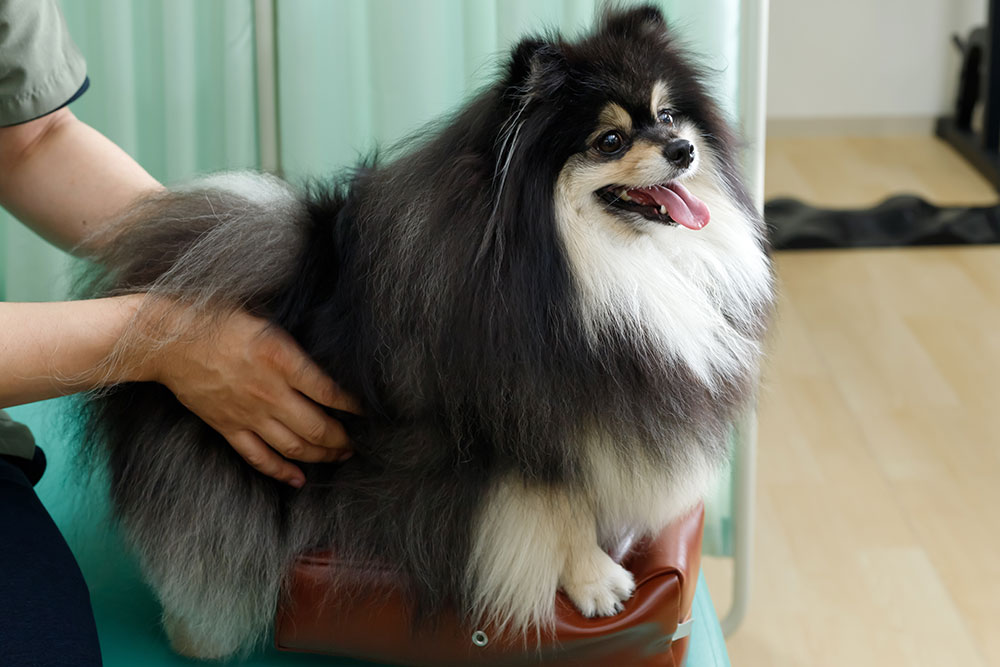
You’re giving your dog a good jaw scratch or rubbing your cat’s belly, and your fingers catch something that wasn’t there before: a small, firm bump under the skin. Maybe it’s under the jaw, maybe behind the knee, but either way, your stomach drops a little. That reaction is completely normal.
So should you be worried about an enlarged lymph node? The honest answer is: it depends. Swollen lymph nodes can mean anything from a minor infection to something more serious, and the only way to know for sure is a veterinary evaluation. The good news is that many causes are very treatable, and even more serious diagnoses come with real options when caught early.
At Liberty Veterinary Hospital in Liberty Twp, OH, our AAHA-accredited team provides thorough, compassionate care for dogs, cats, and exotics, including careful physical exams that catch changes like swollen lymph nodes. If you’ve noticed a new lump or swelling, request an appointment so we can take a look and give you a clear path forward.
What Are Lymph Nodes, and Why Do They Matter?
Lymph nodes are small, bean-shaped structures scattered throughout your pet’s body. Think of them as checkpoints for the immune system. They filter lymph fluid, trap germs and abnormal cells, and produce immune cells that help fight infection and disease. When something triggers an immune response, whether it’s a tooth infection or something more widespread, lymph nodes can swell as they ramp up their activity.
You can sometimes feel certain lymph nodes when they’re enlarged, especially the ones close to the surface. Knowing where lymph nodes are located on your dog makes it easier to recognize changes during everyday petting. Cat lymph nodes are in the same places as a dog, but smaller and harder to feel.
Common nodes you might feel when they’re swollen:
- Mandibular: just under the jawline
- Prescapular: in front of the shoulders
- Axillary: in the armpit area
- Inguinal: in the groin
- Popliteal: behind the knee
Routine exams are one of the best ways to catch lymph node changes early. During wellness care visits, we check lymph nodes as part of every physical exam so we can spot subtle shifts before they become bigger concerns.
What Causes Lymph Nodes to Swell?
Lymph node enlargement (called lymphadenopathy) is a sign, not a diagnosis on its own. It tells us the body is responding to something, but the underlying cause determines what happens next. The main categories include infections, inflammation, immune reactions, and cancer.
Can Infections Make Lymph Nodes Enlarge?
Absolutely, and this is one of the most common reasons. When the immune system fights off germs, the nearest lymph nodes often swell in response. A dental abscess or ear infection typically enlarges the nodes under the jaw. A skin wound on the leg may cause the node behind the knee to react.
Systemic infections can affect multiple node groups at once. Some of the more common infections that cause can cause multi-node swelling are:
- Tick-borne illnesses like Lyme disease along with fever and joint pain.
- Dogs exposed to standing water may be at risk for leptospirosis, which can present with fever, lethargy, and organ changes.
- Certain environments also increase risk of fungal disease, sometimes with cough or weight loss alongside swollen nodes.
Year-round parasite prevention, regular dental care, and prompt attention to cuts or bites all help reduce risk. Most infectious causes respond well to targeted therapy once identified.
Could Cancer Be the Reason?
It’s the question most pet owners dread asking, and it’s worth addressing honestly. Lymphoma is the most common cancer that directly affects lymph nodes in both dogs and cats. It develops from lymphocytes, the immune cells that live within the nodes, and there are several types of cancer in pets that can involve the lymphatic system.
In dogs, canine lymphoma most often appears as the multicentric form, where multiple lymph node groups enlarge at the same time. The nodes usually feel firm and painless. Certain breeds carry higher risk, including Golden Retrievers, Boxers, Bulldogs, Bernese Mountain Dogs, and Rottweilers, and risk tends to increase with age. Resources on understanding lymphoma can help set realistic expectations for remission and quality of life.
In cats, feline lymphoma can vary by location. The alimentary form affects the gastrointestinal tract, mediastinal lymphoma develops in the chest, and cutaneous forms appear on the skin. Each behaves differently and requires its own approach to diagnosis and treatment.
Other cancers can also spread (metastasize) to lymph nodes from a primary site like the skin, mouth, or abdominal organs. While a cancer diagnosis is serious, many pets enjoy meaningful, comfortable time with thoughtful treatment and attentive monitoring.
What Else Can Cause Swollen Lymph Nodes?
Less common causes round out the picture. Vaccine reactions or drug hypersensitivity can temporarily enlarge nodes near an injection site. Autoimmune disorders may create persistent inflammation that affects lymph nodes throughout the body. Congenital or acquired problems with lymphatic drainage, including lymphedema, can also cause swelling.
When the cause isn’t immediately obvious, our clinicians use a logical diagnostic approach to separate infectious, inflammatory, immune, and cancer-related conditions. If you’re concerned about changes you’re feeling, reach out to us to talk through what you’re noticing.
How Do Veterinarians Figure Out the Cause?
Finding the reason starts with a thorough physical exam and a conversation about your pet’s recent history. From there, we decide together which tests make sense.
What Happens During the Physical Exam?
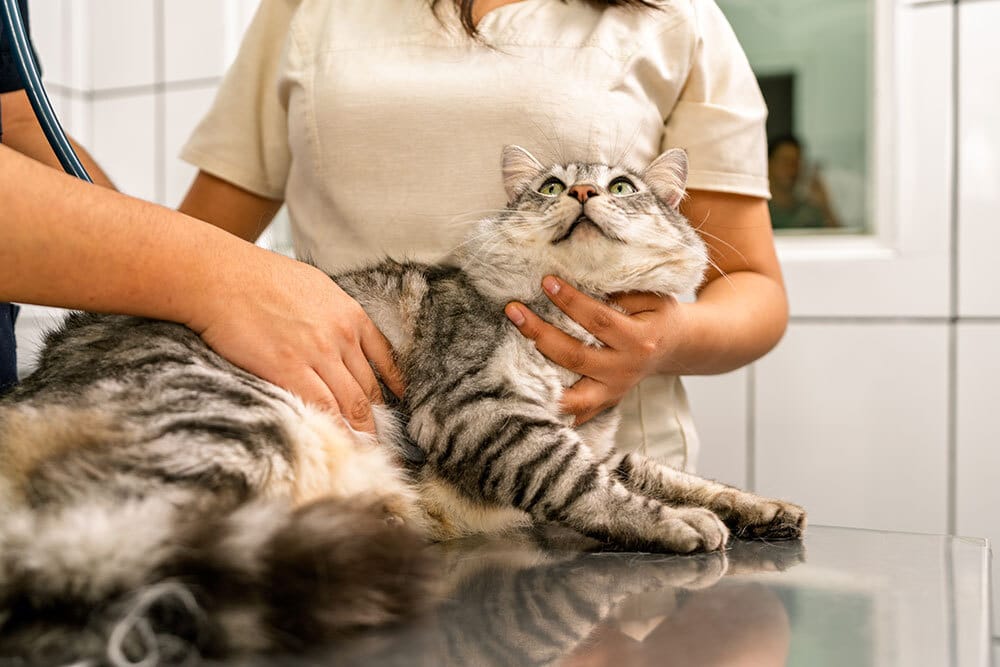
We gently feel each lymph node group, checking size, shape, texture, warmth, and whether nodes are painful or attached to surrounding tissues. The pattern of swelling gives us important clues:
- Single enlarged node: Often points to a localized issue like a nearby wound or tooth infection
- Regional cluster: Suggests a broader problem in the area that group of nodes drains
- Generalized enlargement (multiple groups): Raises suspicion for systemic infection, immune-mediated disease, or lymphoma
We also check for fever, oral disease, skin lesions, weight changes, cough, nasal discharge, and abdominal discomfort. Everything we learn shapes the testing plan.
Will My Pet Need Cytology or a Biopsy?
In many cases, sampling cells or tissue is the clearest way to get answers. Understanding the difference between cytology vs biopsy can make these options feel less intimidating.
Fine-needle aspiration (FNA) is usually the first step. A thin needle draws a small sample of cells, which are examined under a microscope. It’s quick, minimally invasive, and frequently identifies lymphoma, infection, or reactive changes without sedation.
Biopsy (needle core or surgical excision) may be recommended when cytology results aren’t conclusive, small-cell lymphoma is suspected, or we need to see the full tissue architecture. Advanced testing like flow cytometry, immunophenotyping, or PCR for antigen receptor rearrangement (PARR) can further characterize lymphoma subtypes, which helps guide treatment decisions.
Staging tests help complete the picture and may include bloodwork, urinalysis, chest X-rays, abdominal ultrasound, and sometimes bone marrow evaluation. Our AAHA-accredited hospital uses in-house laboratory testing and imaging, and we coordinate advanced oncology diagnostics when needed to keep you informed every step of the way.
What Are the Treatment Options?
Treatment depends entirely on what’s causing the lymph node swelling. The approach for an infection looks very different from the approach for cancer, and we tailor everything to your pet’s specific situation.
For infections and inflammation, care may include targeted antibiotics or antifungals, anti-inflammatories, wound care, dental treatment, or parasite control. Many infectious causes resolve well with appropriate therapy, and recheck schedules are tailored to your pet’s response.
For lymphoma and other cancers, options include multi-agent chemotherapy protocols (the most effective for achieving remission), single-agent treatments, or steroid therapy depending on goals and overall health. Remission means the cancer is no longer detectable, but it may return, so monitoring and rescue protocols play an ongoing role. Many dogs with lymphoma achieve remission lasting months to over a year with good quality of life.
When treatment isn’t pursued or is no longer effective, palliative care focuses on pain management, appetite support, and hospice-style comfort to keep your pet as happy as possible.
Every pet is different, and we discuss realistic expectations up front so you can make decisions that feel right for your family. Request an appointment and we’ll walk through the options together.
How Will We Track Progress Together?
Rechecks are essential because they show whether nodes are shrinking, holding steady, or changing, and help us adjust therapies quickly.
What ongoing monitoring looks like:
- Follow-up exams to reassess lymph node size and overall comfort
- Repeat bloodwork or imaging as needed to track internal changes
- A simple weekly log at home noting appetite, energy, weight, and any new lumps
We’ll teach you how to gently feel the common lymph node groups at home so you know when something has shifted. Consistent communication helps us respond fast and keep your pet feeling their best. If you have questions between visits, our team is always here.
Frequently Asked Questions
What should I do if I find a lump on my pet?
Schedule an exam and avoid squeezing or poking the area. Jot down when you first noticed the swelling and any changes in appetite, energy, or behavior. If your pet seems painful, develops a fever, or multiple lumps appear suddenly, contact us promptly.
Does an enlarged lymph node always mean cancer?
No. Infections, inflammation, immune reactions, and even vaccine responses can all cause lymph nodes to swell. Cancer is one possibility, but many causes are very treatable. Diagnostics determine which category your pet falls into.
Is fine-needle aspiration painful for my pet?
Most pets tolerate FNA very well. It uses a thin needle (similar to a blood draw or vaccine) and is usually done without sedation. The brief discomfort is minimal, and results can provide answers quickly.
How long does chemotherapy remission typically last?
For dogs with multicentric lymphoma treated with multi-agent chemotherapy, remission often lasts 6 to 12 months or longer. Individual results vary based on lymphoma type, stage, and how the pet responds. Many dogs maintain excellent quality of life during treatment.
Can I check my pet’s lymph nodes at home?
Yes, and we encourage it. During your visit, we’ll show you the five main lymph node groups you can feel. Monthly checks help you catch changes early, which makes a real difference in outcomes.
Taking the Next Step With Confidence
Finding an enlarged lymph node is scary, but a prompt evaluation and clear diagnostic plan turn uncertainty into action. Many causes are manageable, and even serious diagnoses like lymphoma often allow for comfortable, meaningful time with the right care.
If you’ve noticed a lump or swelling, contact us or request an appointment. Our AAHA-accredited team will listen, examine, and guide you forward with kindness and expertise.

Leave A Comment