

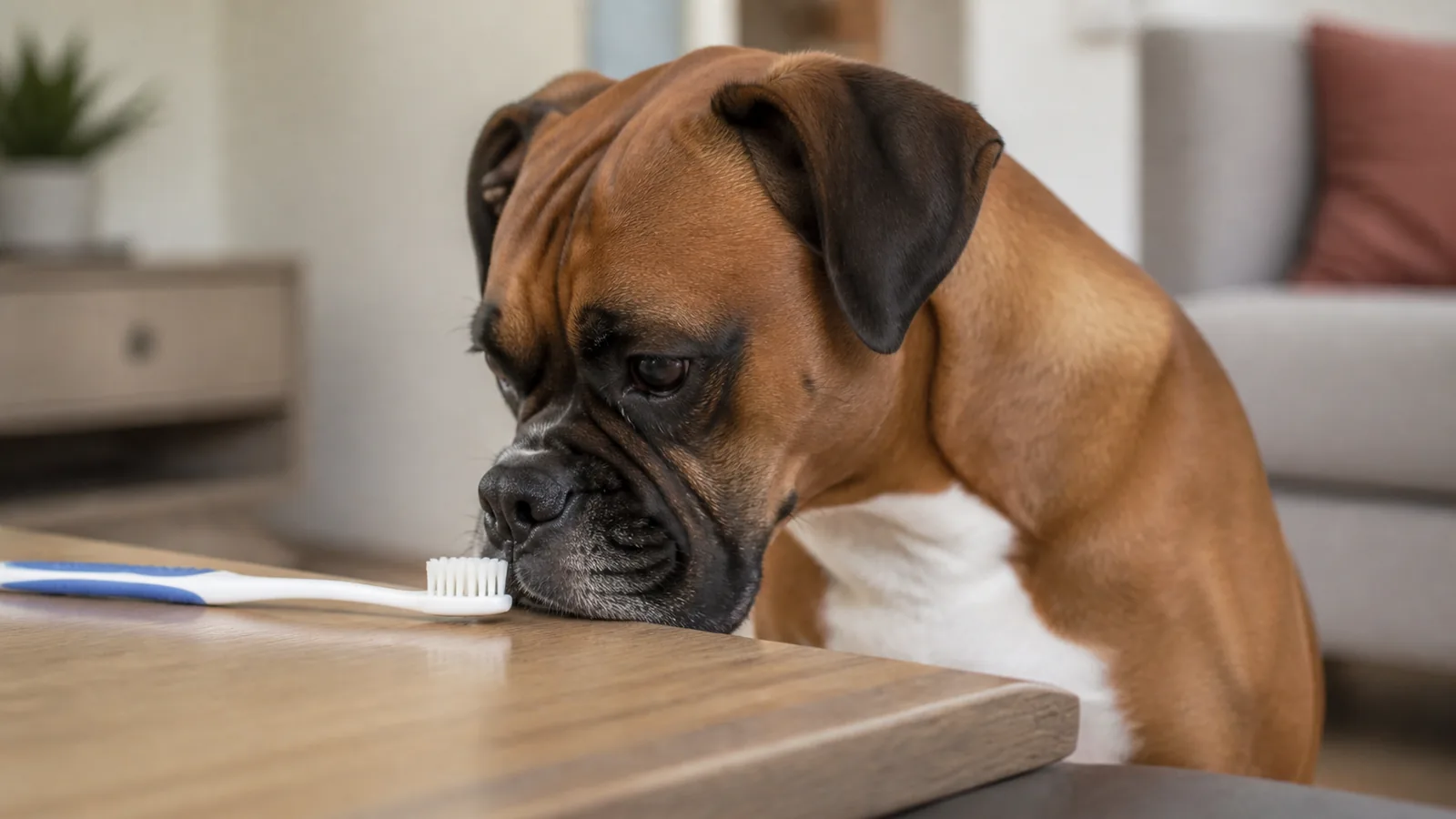
If you are looking at brown buildup on your pet's teeth and wondering whether a home routine can still take it off, the answer depends on how long that layer has been there. Plaque, the soft film that forms within hours of a meal, is what a brush, a wipe, or a gel actually disrupts. Within a few days it mineralizes into tartar, bonds to the tooth surface, and from that point comes off only with instruments during a professional cleaning. That short window is why doing something every day matters more than anything else, and why a brush still does the most work: bristles are the only home tool that reaches the gumline, where periodontal disease actually starts. Wipes, chews, sprays, and gels are worth using when a brush is not realistic, but they only clean what they can reach.
Liberty Veterinary Hospital can tell you where your pet's mouth actually stands right now. Our AAHA-accredited practice’s digital dental X-rays let us see the roots and bone below the gumline, and cleanings happen under anesthesia with vitals monitored throughout. We recommend an exam every six months, and our routine visits and dental care in Liberty Township are where we look at what is building up and talk through which tools are realistic for your pet if a toothbrush is a nonstarter. If that buildup has you second-guessing your routine, request an appointment and we will sort out what belongs at the clinic and what you can manage at home.
What Works at Home and What Doesn't
- Nothing else at home matches a toothbrush, and the research backs daily or every-other-day sessions over one thorough weekend scrub.
- Combinations beat any single tool, because mechanical cleaning breaks up the film and chemical products can then reach the gum tissue underneath.
- Water additives do little on their own, and quite a lot once they're layered onto even a modest brushing or chewing routine.
- No home tool removes hardened tartar or treats disease below the gumline, which is what a professional cleaning under anesthesia is for.
What's Happening in Your Pet's Mouth Between Cleanings?
A clean mouth starts rebuilding its bacterial film almost immediately. Plaque forms within hours of a meal and mineralizes into tartar in a matter of days, and once that hardened layer works its way under the gumline, periodontal disease is already underway. Most dogs and cats have periodontal disease by the age of three, so don’t wait to start until you notice bad breath.
Gingivitis comes first: a red, puffy margin where the gum meets the tooth, sometimes with a little blood on the brush. Caught there, it reverses with good oral care. Once inflammation moves deeper, the ligament and bone anchoring each tooth begin to erode, and that loss doesn't grow back. Loose teeth, abscesses, and pain that animals hide remarkably well all follow, and the bacteria involved don't stay put. They enter the bloodstream through inflamed tissue, which is why chronic oral infection gets tied to added strain on the heart, kidneys, and liver.
What happens between visits decides how often cleanings are needed and how much has to be done each time, and a pet whose teeth get attention most days tends to need shorter, simpler, less expensive appointments. Routine wellness and dental exams here in Liberty Township are where we grade the disease, check for fractures and loose teeth, and tell you honestly whether what you're doing is keeping up.
Is Brushing Still Worth It If You Can Only Manage It Some Days?
Brushing is the most effective home tool because friction is what lifts bacterial film off tooth enamel, and no enzyme or diet fully matches it. Where most families go wrong is brushing frequency: studies show teeth cleaned every other day carried meaningfully fewer dental deposits after several months, while once-a-week cleaning showed no significant benefit.
So the once-a-week scrub, done with real effort and a little guilt, isn't buying what you hope.
How Do Brush the Teeth of a Dog or Cat Who Wants No Part of It?
Refusal is usually an introduction problem rather than a fixed personality trait. Most pets settle into a daily routine over a few weeks, as long as the ramp is slow and every session ends before anyone gets tense.
| Stage | What it looks like | Session length |
| First few days | Touch the muzzle, lift the lip, treat right after | A few seconds |
| Next few days | Let them lick pet toothpaste off your finger | Under a minute |
| Second week | Rub a finger or gauze along the outer canines and cheek teeth | 15 seconds a side |
| Third week on | Swap in a soft brush, one side per session | 30 seconds a side |
| Maintenance | Full mouth, daily or every other day | About a minute |
Use pet-formulated toothpaste only. Human products carry fluoride and foaming detergents that upset stomachs, and the xylitol in some brands is dangerous for dogs. Poultry, malt, and seafood flavors exist for a reason.
Technique splits by species. Most of the plaque that matters sits on the outer surfaces of the big cheek teeth, so brushing a dog's teeth comes down to lifting the lip, angling the bristles about 45 degrees toward the gumline, and covering one side in roughly thirty seconds before switching. Cats need a much smaller footprint, so brushing a cat's teeth works best with a finger brush or an ultra-soft child's toothbrush, the cat supported from behind rather than held down from the front, and shorter sessions to match their tolerance level.
This falls apart in predictable ways: pushing past the moment your pet tenses, prying the jaw open, scrubbing hard enough to leave gums sore, or quitting after one rough night. Back up a stage instead of stopping. If you'd rather see it done once on your own dog or cat, book a brushing demonstration and we'll hand the brush over when you're ready.
Do Dental Wipes Actually Work Well?
Textile tools are a real option. When several dental cleaning tools were compared head to head with daily use, a nylon finger glove and a plain microfiber cloth came close to a toothbrush for reducing plaque and improving gum health, though none of them touched tartar that had already hardened.
The catch is coverage. A cloth or wipe cleans the flat outer faces beautifully and does much less at the gum margin and along the back molars, which is exactly where trouble starts. For a cat who bites at bristles or a senior with a sore mouth, that tradeoff is still worth taking, because daily contact with something beats a brush that lives in a drawer. Not sure what your pet will tolerate? Give us a call and describe how the last attempt went; temperament tells us more than a product list does.
What Dental Products Make a Difference When My Pet Won’t Let Me Touch Their Teeth?
Enzymatic products help, but do much better when paired with regular brushing, wipes, or chews. When a tooth is covered in the sticky biofilm of saliva, bacteria, and food particles that make up plaque, that film prevents the product from reaching the tooth and gumline. Many of the enzymes help break up or decrease plaque, so they do make some difference when used alone. They really shine when you combine them with a routine that breaks up that film mechanically, like a good brushing, wipe, or chew, so the enzymes can reach the places that matter.
Are Water Additives Worth Putting in the Bowl?
Their reputation runs well ahead of the data. On their own, water additives in studies made no significant dent in dental deposits; alongside even modest mechanical care, weekly brushing or a daily chew, the combination outperformed that care by itself, because breaking up the biofilm is what lets the antimicrobial reach the gum tissue.
An additive given daily right after a professional cleaning also cut plaque, calculus, and gum bleeding compared with no follow-up at all, since the barrier had just been removed. Introduce it at half strength and build up, because a cat who decides the water tastes wrong will simply stop drinking. Ask our veterinarians first if your pet has kidney or bladder disease, since some formulations aren't a good match.
Do Gels, Sprays, and Powders Do Anything on Their Own?
Dental sprays, gels, and powders put enzymes or antiseptics directly against the tooth and gumline, which is real chemistry rather than a placebo, but they shift deposits less than mechanical cleaning does, and earn their keep layered on top of it. Look for enzyme systems such as glucose oxidase and lactoperoxidase, or chlorhexidine for short courses when gums are inflamed. Apply right after wiping or brushing, while the surface is disturbed and the active ingredient can reach tissue.
For a household that brushes on weekends and hands out a chew most nights, dropping something in the bowl or applying a quick spray turns a marginal routine into an evidence-backed one.
Can Food and Chews Do Part of the Job?
Both carry real evidence behind them, and for a pet who refuses everything else, they can be most of the routine.
Dental diets work in one of two ways, either through ingredients that bind the minerals in saliva before they harden into tartar or through large, fibrous kibble built to drag across the tooth surface as it's bitten instead of shattering on contact. The second approach held up especially well in studies for cats, where that mechanically designed kibble produced less gingivitis and less calculus than the other options tested. Food still isn't a substitute for a brush. It does mean a cat who has never allowed one isn't out of options, and the same goes for small dogs, flat-faced breeds, and seniors with a history of periodontal treatment.
Plenty of households around Liberty Township hand out a chew every night without thinking of it as dental care. Studies show that adding one dental chew a day produced measurable drops in gum inflammation, plaque, and calculus compared with dry food alone.
A slab fracture of an upper cheek tooth is one of the most common dental injuries we treat, and the usual cause is hard chews like bones, antlers, and hooves. When looking for a dental chew, choose carefully:
- Size and texture: Match the chew to the pet in front of you, since something sized for a Yorkie is a choking hazard for a Lab.
- Digestive tolerance: Rich or oversized options can mean vomiting or loose stool, so start one at a time.
- Quality and safety: A VOHC approved dental chew has been proven to work. Hard chews claiming they clean teeth often break teeth, which is why the thumbnail test is worth the five seconds: if you cannot dent it, it can break a tooth.
A cracked tooth hurts even when a dog keeps eating on the other side, so bring the chew, or a photo of it, to your pet's next routine exam and we'll tell you plainly whether it worries us.
How Do You Tell a Real Dental Product From a Good Label?
Marketing language on a package isn't a standard; a seal from independent testing is. The seal on VOHC-accepted products means the product cleared a defined standard for reducing plaque or tartar in controlled testing rather than simply claiming to, and it spans chews, diets, water additives, gels, and wipes alike.
| Tool | What the evidence shows | Where it fits |
| Toothbrush | Best plaque control of anything done at home | Daily or every other day |
| Finger glove or microfiber cloth | Close behind a brush for plaque and gum health | Pets who refuse bristles |
| Wipes | Clear surface plaque on outer tooth faces | Travel, quick passes, small mouths |
| Enzymatic gel, spray, or powder | Modest alone, useful stacked on cleaning | Right after mechanical care |
| Water additive | Little alone, meaningful alongside mechanical care | Every day in fresh water |
| Dental diet | Less gingivitis and calculus, strongest showing in cats | Base layer for brushing refusers |
| Dental chew | Measurable drops in plaque, tartar, gum inflammation | One a day, supervised |
| Professional cleaning | The only thing that lifts hardened deposits | On our recommendation |
Our dental and anesthesia work is held to AAHA standards, reviewed from outside the building rather than graded by us. Narrowing that list down to two or three accepted products for your dog or cat is a short conversation at your next visit.
When is a Professional Dental Cleaning Needed?
Nothing done at home lifts hardened tartar or treats the space beneath the gum margin, where most periodontal damage happens. A cleaning under anesthesia is a different procedure, not a tidier version of what you do at home.
Some problems sit outside prevention entirely. Cats commonly develop tooth resorption, painful lesions that erode the tooth at or below the gumline no matter how faithfully the mouth is brushed, and either species can hide a fractured tooth or an oral mass behind a lip. Those turn up on an exam and on X-rays.
- Probing and charting: Every tooth gets measured for pocket depth, mobility, and gum recession, which is impossible in an awake pet.
- Scaling below the gumline: The deposits that drive bone loss sit under the gum, and that's where the instruments go.
- Dental X-rays: Roots and jawbone hide most of each tooth, so films reveal fractures, abscesses, and bone loss that look perfectly normal from above.
- Polishing and treatment: Scaling leaves microscopic grooves that polishing smooths, and whatever gets found is addressed while your pet is already asleep.
The trouble with anesthesia-free dental cleaning is that scraping the visible crown leaves everything under the gumline unprobed, unimaged, and untreated, so the teeth look brighter while the disease that costs pets their teeth keeps moving.
How often a cleaning is needed depends on breed, age, how the last mouth looked, and how often you provide dental care at home. Small dogs and many cats need them more often than their size suggests. If it's been a while, or the smell has changed, schedule a dental exam and we'll start with a look rather than a plan.
How Do You Keep a Dental Routine From Falling Apart?
The routines that survive get attached to something you already do every night, use two or three tools instead of one, and forgive the days they don't happen.
- Anchor it: Brushing pairs well with the last walk of the evening or the moment you set out tomorrow's coffee.
- Layer from day one: One mechanical tool plus one chemical one has the best results.
- Keep a fallback: A wipe or a chew on nights when brushing isn't happening keeps the streak alive, and the streak is the whole point.
- Spread the job: Whoever is home does it, and pets often accept one family member more readily than another.
- Watch what improves: Gums that stop bleeding, and breath that no longer announces your dog from across the room.
- Know when it isn't enough: Dropping food, chewing on one side, pawing at the mouth, a red line along the gums, or odor that got worse fast means an exam, not a new product.
A few minutes of coaching from our doctors and nurses usually saves weeks of trial and error, especially with cats.
Dental Home Care Questions Pet Families Ask Us Most
When Should Brushing Start With a Puppy or Kitten?
Right away, the week they come home. Baby teeth don't accumulate much tartar, so early sessions are about the habit rather than the plaque: handling the muzzle, lifting the lip, tasting the paste. Mouths get sore while adult teeth come in over the first several months, so ease off if your puppy pulls away and pick it back up once the new teeth are settled. A kitten who grows up with this rarely fights it later.
My Dog's Breath Is Bad Again a Week After a Cleaning. Did Something Go Wrong?
Probably not. Plaque rebuilds within hours, so seven days without home care is plenty of time for odor to return, and that's the entire argument for daily effort. Breath that turns foul very quickly, or smells rotten rather than stale, can point to a tooth that fractured, a retained root, or tissue that didn't heal the way it should have. Call us if it seems out of proportion to the timeline.
Should I Stop Brushing If the Gums Bleed?
Bleeding usually means inflammation was already there, not that you've caused harm, and gentle daily contact typically improves it within a couple of weeks. Lighten the pressure, switch to a softer brush, and stay consistent. Heavy bleeding, blood coming from one specific spot, or gums that still bleed after a month of careful sessions deserve an exam, because they often signal disease below the gumline that no brush can reach.
Setting Up Home Care That Lasts
No single product carries good dental care on its own, and a perfect streak was never the goal. Layer something mechanical with something chemical, keep it going every day, and let cleanings handle what's already hardened. Liberty Veterinary Hospital sees dogs, cats, puppies, and kittens whose families land somewhere between doing nothing and doing everything, and we’re here to help no matter what stage you’re in. If a brush is a nonstarter or a tooth looks wrong, reach out and we'll build something that fits your household and your pet’s personality.